Pocky is a Japanese biscuit stick usually coated in chocolate. There are many different flavours of Pocky in Japan including almond, strawberry, milk, chocolate mousse, green tea, honey and banana. Pocky is extremely popular in Japan especially among teenagers. It has also spread to other East Asian nations and has a significant presence in both South Korea and China. It has just started becoming popular in Western countries such as Australia, Canada and the United States. In these countries it can be found in Asian supermarkets or grocery stores. My local supermarket has also started stocking it in the Asian food section. In the US it can be found at most large supermarkets such as World Market, Wegmans and Wal-Mart in either the international section or Asian food aisle.
Pocky can be found in dozens of varieties as mentioned above. Some of the more unusual flavours include kiwifruit mango, grape, melon, tangerine, Kobe wine, sweet potato, pumpkin, and soy bean.
Special variations of Pocky also sometimes appear and these include Decorer Pocky (features extra decorative icing) and Dessert Pocky (features sticks covered in cream)
There is also another types of chocolate biscuit stick similar to Pocky called Fran. This is a different brand, but is also delicious and the stick is thicker than Pocky.
Japanese is not too difficult to learn but It does take a lot of motivation and practice to successfully learn the language. The best way to learn Japanese is by taking a class, enrolling in a course or investing in a good textbook. If you can't take classes then the self-study method with the correct resources is a good way.
The best way to learn Japanese is through a variety of methods. You need to work on your grammar, listening, speaking, reading and writing. Its best to think of these as separate categories and focus on each specific category as these require different methods and techniques.
Start by learning the basics through grammar. These books really helped me:
These books cover both polite Japanese, which is extremely important to learn in order to speak Japanese effectively and causal Japanese, which is great for everyday conversations.
I also recommend trying to learn a certain amount of vocab or kanji each day as this helps you build up your vocab and kanji ability. I tried to learn 5 kanji per day or about 20 a week and did the same with vocab.
Watching Japanese anime or any Japanese TV program is a good idea for improving your listening skills and also your vocabulary. Keep a notebook and jot down any new words you hear. Then look them up and find out the meaning.
The traditional Japanese art of Kimono making is now in trouble of becoming an endangered species. Most craftsmen are over 80 years old with few of the younger generation interested in the art, it is likely their skills will die with them. A few hundred years ago, thousands of craftsmen were making kimono, but today only three families in Japan are left carrying out this traditional work. Leading figures are warning that within a decade the art could die out. The industry is struggling to find ways of passing on its craftsmanship to a new generation. The art involves more than 1000 different processes for each kimono and can take 40 years to master a single technique.
Japan has a new super food called nattokinase. Japan has long been known for its healthy and nutritinous diet. Recently, American researchers have discovered the benefits of a 1,000 year old Japanese remedy for dissolving harmful blood clots. This all natural clot buster is called nattokinase and it`s a remarkable enzyme commonly used in Japanese cooking. The main component of this enzyme is natto which is a popular food in Japan. Natto is a fermented soybean made from boiled soybeans and active bacteria. The natural nattokinase enzyme softens and dissolves blood clots so they can be flushed out of your body before they can harm you. Nattokinase also pumps up the production of your body`s own clot-dissolving enzymes.
Todai-ji (東大寺) or Great Eastern Temple, is a Buddhist temple located in the city of Nara, Japan. The temple is listed as a UNESCO World Heritage Site and its Great Buddha Hall is the largest wooden building in the world. It houses the world`s largest bronze statue of the Buddha Vairocana, known in Japanese as Daibutsu (大仏).
Green Tea is the antioxidant wonder. Japan and Asian cultures have long appreciated and used the health benefits of green tea. Western cultures are only now beginning to recognize the health preserving benefits of green tea. Researches now know that green tea is a powerful antioxidant with compounds that can shield you from many harmful diseases including cancer and heart disease. It is now known that green tea improves cardiovascular health, reduces the risk of cancer and helps with weight loss.
Green tea comes from the same plant as black tea, but is harvested at a younger age. It is consumed fresh, rather than roasted like black tea. Green tea is thus less processed and retains more of its nutrients and antioxidants than black tea.
Celebrating its 13th year, Frankston`s Christmas Festival of Lights is a wonderful opportunity to bring the family together and celebrate Christmas. The event is on Saturday, 27 November 2010 from 5:00pm to 10:00pm at Davey Street, Frankston (Melway ref: 100A C8). The festival will come to life again this year with host, Network Ten`s Mike Larkan, for an evening of fun, festivities and family entertainment.
The highlights will include:
Santa`s House – where children can meet Santa
North Pole – Children`s Activity Centre
Art and Craft
St Luke`s Anglican Church Live Nativity Scene
Meet and Greet Shrek
Live on Stage – Scooby Doo
Rides and Amusement
Sound and Light Show – lighting of Christmas Tree
Make sure you don`t miss Frankston`s Christmas Festival of Lights
Miso is a paste from Japan made from crushed soybeans, barley, rice or wheat and a mold known as koji. Miso is fermented anywhere from a few weeks to a few years. The most common types of miso are red, white, barley and soybean. Miso was introduced to Japan by Buddhist monks in the 7th century, and has several well known health benefits.
Matsumoto Castle (松本城 Matsumoto-jō), also known as the “Crow Castle” because of its black exterior, is one of Japan`s premier historic castles. The castle is located in the city of Matsumoto in Nagano Prefecture. The castle is 15 minutes on foot from the train station and costs ¥500 for admission.
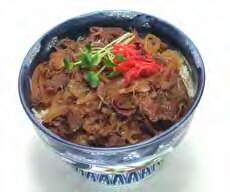
This month`s Easy Japanese Cooking recipe is Gyudon or Beef Bowl.
It is a very popular item served by some of Japan`s fast food restaurants and is easy to make at home.
Preparation Time: 5-10 mins
Cooking Time: 7-8 mins
Makes 4 servings
Ingredients
• 6-8 cups hot cooked rice
• 225g thinly sliced beef
• 1 medium onion, thinly sliced
• 3 tbsp vegetable oil
• 2 tbsp fresh ginger juice
Sauce:
• 1 cup water
• 1/3 cup dark soy sauce
• 1/3 cup mirin
Method
1. Boil plain white rice
2. In a large frying pan, heat vegetable oil over a high heat
3. Cook the onion for a few minutes until soft
4. Add the beef slices and cook for another minute or until the meat is no longer red
5. Mix the ingredients for the sauce together and add sauce to pan
6. Continue to cook for another minute and then remove from heat
7. Stir in the ginger juice
8. To serve, put portions of hot rice 1.5 to 2 cups per serve into individual donburi bowls and cover with cooked beef and onions.
In Japan, a lot of people like to eat their gyudon with pickled ginger and top it with a lightly beaten raw egg mixed into the rice.
Takayama (高山市) is famous for its miso, ramen, mountain vegetables and Hida beef. Walking through the city is a taste sensation. A speciality is Hida beef sushi.
This is a picture of the raw beef sushi that costs 500 yen in Takayama.