Japan Australia Pages

Sunday, December 23, 2018

Small Buildings of Kyoto: Volume II Book Review

Small Buildings of Kyoto: Volume II
The second volume of John Einarsen’s delightful little picture book, Small Buildings of Kyoto: Volume II has recently been published by Kyoto Journal. The book came about from a hit photo series on Instagram which focused on the charm and visual richness of seemingly ordinary structures in Kyoto. This photo series led to the first edition, Small Buildings of Kyoto being published in 2017.

Kyoto Journal is an award-winning quarterly English magazine founded in Kyoto in 1987 with the goal of presenting cultural insights from Japanese and Asian culture.

The Book’s Content 


Small Buildings of Kyoto: Volume II is a great insight into the real buildings and architecture of Kyoto that usually don’t make it into the books and travel guides about this historic city.

Kyoto, Japan’s ancient capital is famous for its masterpieces of Japanese architecture and UNESCO World Heritage Sites with many of its buildings listed as National Treasures and Important Cultural Properties.

While the buildings in this book might not have the stunning beauty of these national treasures, they do have their own charm and beauty through their quaint and quirky characteristics. Each building has its own story to tell, offering you a fascinating insight into the way Kyotoites live today.


Small Buildings of Kyoto: Volume II

My View 


Why I really like this book? It is compact and full of beautiful colour photos that highlight the enduring charm of Kyoto’s everyday architecture.

The colour photos in the book are not of the iconic postcard-worthy attractions of Kyoto such as Kinkaku-ji (The Golden Pavilion) and Kiyomizu-dera Temple, but the everyday buildings that make up the urban fabric of the city.

I love the range of buildings covered in this book that showcase a mix of influences with some dating from the pre-war Taisho era (1912-1926) and others an interesting hybrid of textures, materials and shapes.

Kyoto Coffee Pocket


One thing that I really admire about Japanese architecture is how they get the most out of working with limited space to create elegant and graceful structures.

The best way to really get out and explore Kyoto is on foot by walking through the backstreets and tucked-away neighbourhoods that offer you the magic of the everyday charm of modern Kyoto.

This book is perfect for anyone looking to get some real insight on the everyday life of modern Kyoto. The quirky, humble and endearing buildings in the book reveal another side of Japan’s ancient capital city.

Ginka Coffee Shop


About the Writer 


The author, John Einarsen is a photographer and long-term resident of Kyoto. Originally from Colorado, he fell in love with Kyoto on his first trip there and settled down there in the early 1980s. He is the founder editor of Kyoto Journal and has served as an advisor to the Japan Times.

Small Buildings of Kyoto: Volume II is available now from the Kyoto Journal Website.


Sunday, December 16, 2018

Japan Visions Photobook

Japan Visions Photobook
Japan is a country of contrasts from the futuristic glowing neon of Tokyo to the historic temples and shrines of ancient Kyoto. You don’t even have to leave town to see the ultra-modern mixed in with the traditional.

One of the many things that I love about Japan is seeing this constant on a daily basis. I could be walking down the street in Gifu and see a high-tech vending machine on a corner which leads to an old street lined with lattice-walled houses from the Edo period (1603-1868).  

Japan Visions is the debut photographic book from Amélie Ravalec which highlights through images the colouful contrast that is the land of the rising sun.

The Book’s Content


Here’s what Amélie Ravalec says: “Japan Visions is an evocative and colourful journey through the streets of Japan, from Tokyo’s neon lights and underground culture to the ancient beauty of Kyoto’s temples and gardens. Amélie Ravalec debut photographic publication captures the country’s odd beauty: android robots, erotic wooden plaques, guillotined dolls and cyberpunk warehouses.”

Japan Visions Photobook Android Robots
Showa Period Robots

My View


Why I really like this book? It is the perfect size for picking up and flicking through to enjoy the many wonderful large and vibrant colour photos. I also really like how it has absolutely no text, but just lets the colour photos do the talking. As they say, “A picture is worth a thousand words”.

Japan Visions Photobook Pictures
A picture is worth a thousand words

As a photographer, I really like the way that Amélie Ravalec captures the essence of daily life in Japan from ordinary street views to people just going about their regular life. The photos also show the underground side of Japan from weird and wonderful Showa period (1926-1989) robots and dolls to erotic ema plaques and neon-lit alleyways.

Japan Visions Photobook Everyday Life
Daily Life on the Streets of Japan

Japan Visions Photobook Neon Lights
Neon Light Life in Japan

About the Writer


The author, Amélie Ravalec is a London-based documentary filmmaker and photographer. She is the director of Industrial Soundtrack for the Urban Decay (2015), Paris/Berlin: 20 Years of Underground Techno (2012) and the forthcoming documentary Art & Mind (2019).  

Japan Visions offers you a glimpse into the colourful contrast that makes Japan the special place that it is for many of us expats living in the Land of the Rising Sun.

Japan Visions is available now via Amélie’s website.

Japan Visions Photobook


Sunday, December 9, 2018

Exploring the North of Okayama Prefecture

Takahashi is an old castle town in Okayama Prefecture
In the final part of this three-part series on Okayama Prefecture we will explore the northern area of Okayama Prefecture which includes Takahashi, Hiruzen and Okutsu. If you missed the first two parts of the series, you can see our guide on Okayama City and Kurashiki in part 1, and southern Okayama Prefecture in part 2.

The northern part of Okayama Prefecture is famous for its amazing castles, old villages, hot springs and stunning mountain scenery.

Takahashi


Takahashi is an old castle town in Okayama Prefecture full of history, culture and nature, located about 60 minutes from Okayama City.

The most famous attraction in Takahashi is Bitchu Matsuyama Castle, one of only twelve original castles still remaining in Japan. Located atop a 430-meter mountain, it is the highest stronghold in Japan with an existing castle tower. On a cold and clear morning in autumn, a sea of clouds form around the castle, giving the illusion that the castle is floating in the sky. This has earned the castle the cool nickname, “The Castle in the Sky”. The best time to visit Bitchu Matsuyama Castle is very early morning in autumn for the amazing fall foliage and sea of clouds.

Bitchu Matsuyama Castle
Bitchu Matsuyama Castle floating in a sea of clouds in autumn

Located deep in the mountains of Takahashi, 550-meters above sea-level is Fukiya Furusato Village, a remote mountain village that is home to a beautiful street of houses with red roof tiles and walls. Here you can visit a one-of-a-kind street in Japan that is painted in traditional “Bengara” a vivid red colour pigment made from oxidized iron. The mountain village once flourished as a copper mining town and major producer of “Bengara” during the late Edo Period (1603-1868) through to the Meiji Period (1868-1912). Today, the uniform red colour of the buildings here hark back to the past as well as appealing to the eye with their aesthetically looking appearance. The red pigment helps preserve the buildings as well as repelling insects, which is definitely a good thing in my book.

The uniform red of the buildings of Fukiya Furusato has earned the village recognition as an Important Preservation District for Groups of Traditional Buildings as well as being labeled as an Important Cultural Asset by the Japanese government. In order to save and preserve these beautiful and historic buildings, the local residents have turned many of them into charming shops selling local handicrafts and museums to inform about the culture and history of the village. Some of the buildings have even been turned into accommodation, where you can rent a house for a stay to soak up the authentic atmosphere further in this magical village.

Fukiya Furusato
Fukiya Furusato Village is painted in traditional Bengara red


Hiruzen Kogen Highlands


Hiruzen Kogen Highlands in the north of Okayama Prefecture reminds me a lot of the beautiful mountains here in Gifu. Located on a gently sloping plateau, this prominent resort area in Western Japan is famous for its rolling hills and Jersey cows. The best time to visit is spring for the fresh greenery, or autumn for the colourful fall foliage.

Hiruzen Winery is the perfect place to recharge the batteries with delicious western style food made with its famous wine grown from wild mountain grapes. The winery located on a hill overlooking some stunning mountain scenery has some exquisite wine to choose from which has won multiple awards at Japanese wine competitions.

Hiruzen Winery
Amazing views from Hiruzen Winery in the Hiruzen Kogen Highlands of Okayama


Hiruzen Jersey Land is where you can try some fresh local dairy products made from the milk of the local Jersey cows. The best way to sample some of this Jersey magic is via trying a Jersey milk soft-serve ice cream, or some cheese made from the milk of the area’s most famous residents, the Jersey cows.

The best way to explore the local area is by bike and the Hiruzen Cycling Club gives you the chance to see the beautiful nature of the area in a fun and healthy way. Follow the Hiruzen Kogen Cycle Road to enjoy the beauty nature of each season from the fresh green of spring to the blazing red leaves of autumn.

One of the best nature spots in the area is Shiogama Cold Spring, a natural cold spring located in a secluded valley at the foot of the Naka-Hiruzen Mountains 520 meters above sea level. The cold spring measures 12 meters from north to south, 5 meters from east to west, and is 1.9 meters at its deepest point. It is classified as one of Japan’s Top 100 Springs, and produces 300 liters of water every second.

Shiogama Cold Spring
Shiogama Cold Spring at the foot of the Naka-Hiruzen Mountains


Okutsu Onsen


The Okutsu Valley is a picturesque valley that is home to the largest formation of natural potholes in East Asia. The valley is alive with colour during fall with colourful autumn leaves. You can even enjoy a light-up event that offers you the chance to experience the colourful autumn leaves illuminated at night.

Okutsu Valley
Autumn leaves illuminated at night in the Okutsu Valley


Okutsu Onsen is a picturesque hot spring town nestled among mountains and mountain streams of Okayama. The water from Okutsu Onsen is said to purify the skin and make you more beautiful. The hot spring water is called “Bijin no Yu” in Japanese, meaning beautifying water.

Okutsu Onsen
Ashiyu foot baths at Okutsu Onsen

The best place to experience these beautifying waters is at Meisen Kagiyu Okutsuso, a traditional Japanese inn (ryokan) located at Okutsu Onsen. Here you can experience sleeping in a Japanese tatami room with futon and soaking in the natural hot spring baths at the inn. Just outside the inn is a river which has two different ashiyu (foot baths) on either side.

Meisen Kagiyu Okutsuso
Meisen Kagiyu Okutsuso traditional Japanese inn at Okutsu Onsen

There you have it, my extensive guide to Okayama Prefecture from the south to the north. After reading this series I think you’d agree that Okayama is full of amazing hidden gems, which make it in my opinion, one of the must-see destinations in Japan.

Fukiya Furusato Village
Fukiya Furusato Village in Takahashi

Sunday, December 2, 2018

Exploring the South of Okayama Prefecture

Seto Inland Sea
In the second part of this three-part series on Okayama Prefecture we will continue exploring the southern area of Okayama Prefecture which includes Okayama City, Kurashiki, Akaiwa, Bizen and Setouchi. If you missed it, you can catch part 1 of the series here, which focuses on Okayama City and Kurashiki.

The southern part of Okayama Prefecture is famous for its traditional pottery, legendary Japanese samurai swords, olive gardens, spectacular sunsets and Mediterranean Sea like coast.

Akaiwa


Akaiwa is a city in Okayama Prefecture that is one of the three remaining places in Japan that produces the bamboo stalk for fude (ink brushes). It is also famous for its top quality Omachi rice, which can mean only one thing, top-notch sake.

The Muromachi Shuzo Sake Brewery was founded in 1688, making it the oldest existing sake brewery in Okayama Prefecture with a history of over 320 years. The sake brewery takes great pride in its products with its traditional techniques handed down from generation to generation. The award-winning sake is made using Omachi cold spring water (one of the Top 100 Great Springs of Japan) and Omachi rice, the only pure strain of rice left in Japan, which is produced locally in Akaiwa.

Muromachi Shuzo Sake Brewery
Gold medal sake at Muromachi Shuzo Sake Brewery in Akaiwa


Inbe


About 20 kms from Akaiwa is Inbe, a town in Bizen City, which is the home of Bizen-yaki Pottery, the oldest and most revered form of pottery in all of Japan. During the Kamakura Period (1185-1338) Bizen came to prominence as one of the six pottery producing centers in Japan.

Today, Bizen Pottery is renowned for its strength and beauty throughout Japan. Bizen Pottery with its unique unglazed natural reddish or brownish colour was rougher and fired at higher temperatures to produce a more durable type of pottery. Bizen Pottery is said to be so strong that even if you throw it, it will not break easily. It also said that the water preserving qualities of the pottery allow flowers to last longer in Bizen vases and beer to stay colder with a creamer head in Bizen cups.

Inbe Minami Ogama Ato is where the South Large Kiln for making Bizen Pottery was placed. It was used as a communal kiln during the golden age of Bizen ware in the Momoyama (1568-1600) and Edo period (1600-1868). Today the hill is covered with broken pieces of Bizen-yaki that were thrown there after breaking during the firing process. It is an interesting place to visit giving you a glimpse of the history of Bizen ware and a great view of the city from the top of the hill.

Inbe Minami Oogama Ato
View over Inbe from Inbe Minami Ogama Ato

Bizen-yaki Dento Sangyo Kaikan is both a tourist information center and a café where you can enjoy a cup of coffee in traditional Bizen ware cups, or head upstairs and enjoy the gallery for Bizen-yaki artists, where you can purchase many kinds of Bizen ware pieces.

Bizen-yaki Dento Sangyo Kaikan
Bizen-yaki on display at the Bizen-yaki Dento Sangyo Kaikan

If you are feeling the creative juices flowing and want to give this unique art form a try, check out the Bizen-yaki Tokichi pottery experience to create Bizen ware that will be fired and posted out to you when complete.
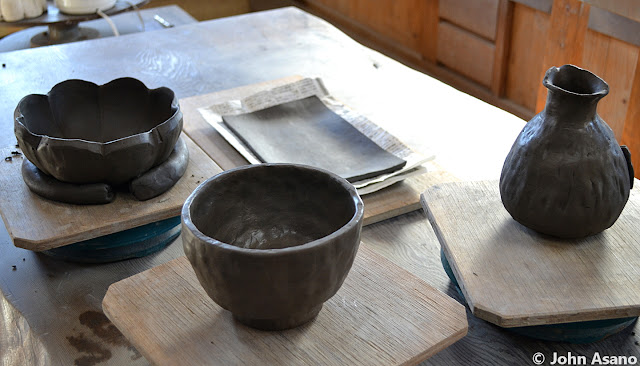
Bizen-yaki Tokichi
Bizen-yaki Tokichi Pottery Experience

Amatsu Shrine is a Shinto shrine dedicated to Bizen Pottery. The shrine founded in 1411 enshrines the patron god of the birthplace of Bizen Yaki. Bizen Pottery can be found everywhere here from the Guardian shrine dogs that stand at the entrance of the shrine and the shrine’s roof tiles to the path approaching the shrine, which is lined with tiles contributed by local Bizen Pottery artists. Different bits and pieces of Bizen Pottery can be found all over the shrine precincts such as Bizen ware talisman and the Seven Lucky Gods of Fortune.

Amatsu Shrine
Amatsu Shrine in Inbe

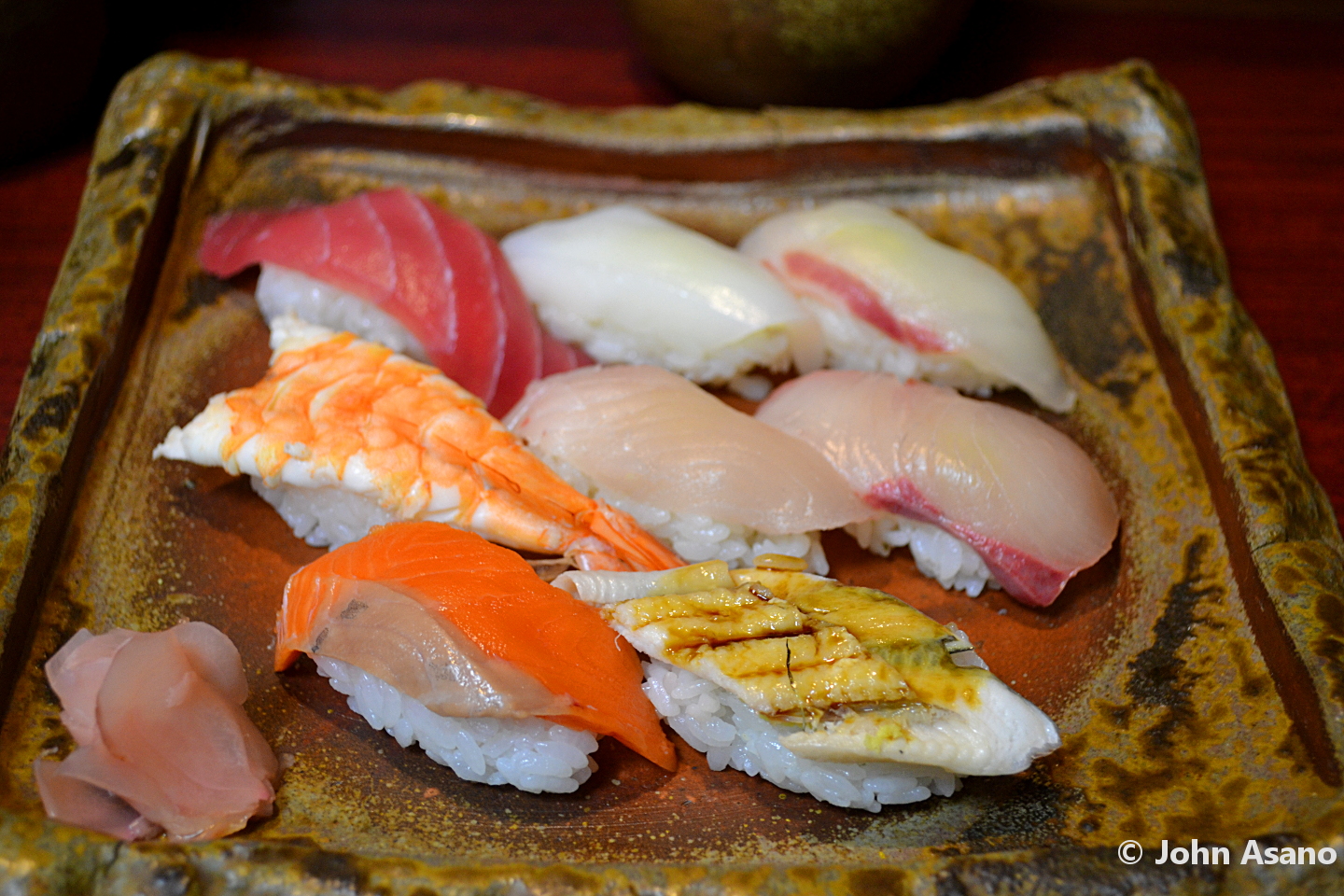
Feeling hungry? Stop by Kokorozushi for fresh sushi served on Bizen ware plates. This place serves some of the best sushi I’ve had in Japan which tastes even better when served on a beautiful Bizen-yaki plate made by local artists.
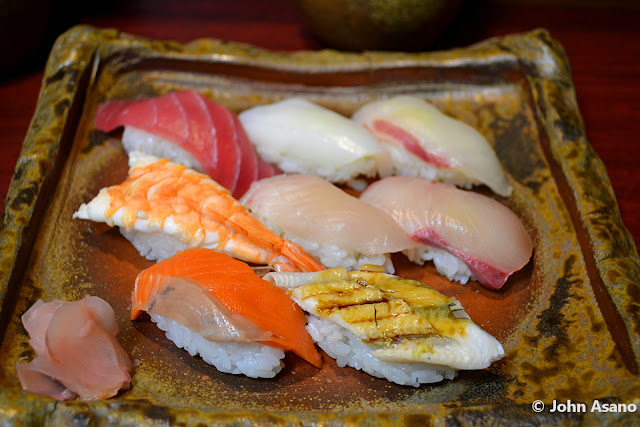
Kokorozushi
Fresh sushi served on a Bizen-yaki plate at Kokorozushi in Inbe


Osafune


Osafune is a town in Setouchi City, which once flourished as a major producer of Japanese swords.

The Bizen Osafune Japanese Sword Museum in Osafune is the home of the Japanese sword and is perfect place if you are a samurai fan like myself. The Bizen area was one of five major sword making areas in Japan during the age of the samurai, so has a long history and reputation for producing top-quality swords. There are three essential elements to producing quality swords: their use (ability to cut), their beauty (appearance) and their spirit (passed from the flames by the master sword-smith). Around half of the existing swords designated as National Treasures of Japan were made in Bizen.

The iron-rich mountains around Bizen provided the quality raw materials necessary to produce legendary Japanese swords that are now regarded as works of art. Here you can witness traditional sword forging techniques and view some of the many masterpieces that are on display.
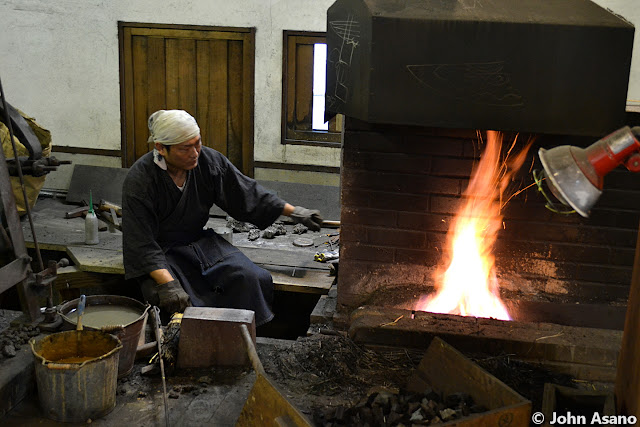
The Bizen Osafune Japanese Sword Museum in Osafune


Setouchi


Ushimado in Setouchi City is a seaside resort town that overlooks the many beautiful islands that dot the Setonaikai (Seto Inland Sea). It is the perfect place to admire the Seto Inland Sea, which is called the “Aegean Sea of Japan”. Here you can enjoy the beautiful island scenery of the Setonaikai while admiring the stunning sunset, which is regarded as one of the “Best 100 Sunsets in Japan”. Take a stroll or leisurely ride up to the Ushimado Olive Garden for some breathtaking views of the blue sea and Seto Islands mixed in with the green of the olive groves.

Ushimado Olive Garden
View of the Seto Inland Sea from the Ushimado Olive Garden

The Hotel Limani & Spa in Ushimado is a resort hotel inspired by the Greek Islands. If the scenery, architecture, blue and white colours don’t get you then the authentic Greek food prepared by the head chef, a Greek-Australian will definitely make you feel like you are in Greece. The dry-aged Okayama beef is to die for but if you are after something truly special give the chicken & lamb Gyros a try.

The Hotel Limani & Spa in Ushimado

I hope you enjoyed learning a bit more about some of the great attractions that southern Okayama Prefecture has to offer the keen traveler. Please stay tuned for part 3 where we will explore the northern area of Okayama Prefecture.

Seto Inland Sea
The Seto Inland Sea from The Hotel Limani & Spa in Ushimado

Share This via Social Media

Related Posts Plugin for WordPress, Blogger...