Matsumoto Castle (松本城 Matsumoto-jō), also known as the “Crow Castle” because of its black exterior, is one of Japan`s premier historic castles. The castle is located in the city of Matsumoto in Nagano Prefecture. The castle is 15 minutes on foot from the train station and costs ¥500 for admission.
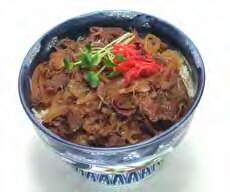
This month`s Easy Japanese Cooking recipe is Gyudon or Beef Bowl.
It is a very popular item served by some of Japan`s fast food restaurants and is easy to make at home.
Preparation Time: 5-10 mins
Cooking Time: 7-8 mins
Makes 4 servings
Ingredients
• 6-8 cups hot cooked rice
• 225g thinly sliced beef
• 1 medium onion, thinly sliced
• 3 tbsp vegetable oil
• 2 tbsp fresh ginger juice
Sauce:
• 1 cup water
• 1/3 cup dark soy sauce
• 1/3 cup mirin
Method
1. Boil plain white rice
2. In a large frying pan, heat vegetable oil over a high heat
3. Cook the onion for a few minutes until soft
4. Add the beef slices and cook for another minute or until the meat is no longer red
5. Mix the ingredients for the sauce together and add sauce to pan
6. Continue to cook for another minute and then remove from heat
7. Stir in the ginger juice
8. To serve, put portions of hot rice 1.5 to 2 cups per serve into individual donburi bowls and cover with cooked beef and onions.
In Japan, a lot of people like to eat their gyudon with pickled ginger and top it with a lightly beaten raw egg mixed into the rice.
Takayama (高山市) is famous for its miso, ramen, mountain vegetables and Hida beef. Walking through the city is a taste sensation. A speciality is Hida beef sushi.
This is a picture of the raw beef sushi that costs 500 yen in Takayama.
The traditional Japanese meal or banquet is divided into consecutive courses according to the method of preparation. For example, a grilled dish comes before a steamed dish, and a steamed dish before simmered foods, and so on. The bare minimum of the meal consists of miso soup, rice and pickles (tsukemono).
The Japanese meal is a symphony of flavour, colour, texture and seasonal produce. It is fresh and prepared so that the foods natural flavour is enhanced. The traditional basic formula of a Japanese meal is “soup and three”. That is soup and three main dishes as follows:
1. Fresh, uncooked fish (sashimi)
2. A grilled dish (yakimono)
3. A simmered dish (nimono)
These dishes will be followed by boiled rice, pickles, tea and fresh fruit as dessert.
Takayama (高山市) is a city located in Gifu, Japan. It is a small beautiful city known for its traditional architecture and crafts. Takayama lies in the ancient Hida district tucked away between the mountains of the Japan Alps. It is a great place to spend a few days or to use as a base to visit the mountains or surrounding onsen hot springs.
This picture is of the Hida Takayama folk village, which is near Takayama.
Daiso Japan, the discount superstore is coming to Australia and a shopping center near you. Daiso originated in Japan with the 100 yen store and now has 3200 stores worldwide in 24 countries. The first Australian store will open shortly in Melbourne, and offer over 120,000 different products at the bargain price of $2.80. Some of the products on offer include mugs, vases, dishes & plates, homeware, snacks, drinks, stationary, clothing, cosmetics, bags, toys, and loads of weird and wonderful products from Japanese culture, all items at a flat price of $2.80. The products are Japanese quality items at bargain prices. Daiso buys in bulk, so it can offer the consumer lower prices. It will provide real competition for the likes of Big W, Kmart and Office Works with its products and prices.
Chopsticks are the traditional eating utensils of China, Japan, Korea, Vietnam and the Northern provinces of Laos, Thailand, and Burma. They are generally believed to have originated in ancient China and then spread over Asia with the influx of Chinese immigrants. Chopsticks are usually made of bamboo or plastic but can also be made of metal, bone, ivory and various other types of wood.