Japan Australia Pages

Friday, April 22, 2022

Nihongo Master Podcast

Nihongo Master
I recently had the pleasure to be a guest on the Nihongo Master podcast to talk about spring in Japan, one of my favourite topics. 

Nihongo Master is a fantastic Japanese learning website that helps you study Japanese in a fun and interactive way. The e-learning site focuses on helping learners at every level master the Japanese language. 

They have their own YouTube channel and a popular podcast, so you can learn about the Japanese language and culture on the go. 

During my chat with host, Azra, we talked about a wide range of springtime topics including about my experience with spring in Japan, spring in my home of Gifu in central Japan, my tips and advice for anyone looking to travel to Japan in spring, and the best spots to see the cherry blossoms in the Chubu area of Japan. 

You can check out the podcast episode on the following link Nihongo Master S11E9: Wrap Up Japanese Spring with John from Japan Australia

If you are looking to learn Japanese, or just need some extra motivation in order to study, give Nihongo Master a try.

Nihongo Master Podcast


Sunday, April 17, 2022

A Lovely Experience at Ibiza55 Club l Bar

Charming night at Shinjuku
I was strolling in the nicely lit streets of Shinjuku, looking up at the lovely neon lights climbing up the buildings, scanning the people whose work cages were open. The sun was setting down. 

People were laughing. The ambiance was much less stressful than the morning rush. That evening’s haste was much more hopeful, as if people were looking forward to something. 

Of course they were. It was Shinjuku! 
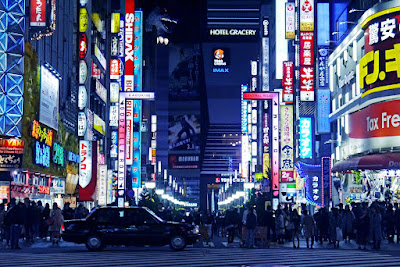
Charming night at Shinjuku


Night came up and I passed by an interesting entrance of a bar/club with vibrant colors. People were rushing to go in from the outside. It had a white frame that said Ibiza55. I went through the ignited frame of lights and went down the stairs to be welcomed by a very friendly owner who seemed to love what he does. 
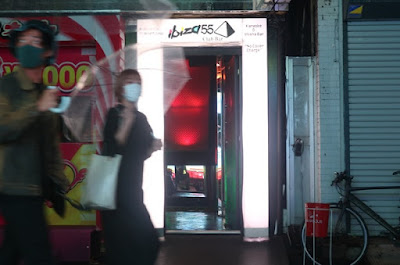
The entrance of that bar called me in


I love to meet those kinds of people, who find a way to enjoy and love what they do, rather than stoically accepting life’s harshness, those who see a full half in a cup. I marched a few more steps to the bar and ordered a beer. The bar had a colorful neon sign behind it, which made me more aware that I was in Shinjuku, one of the best places to party in one of the most prominent cities in the world, Tokyo. It made me feel blessed. 

Partying in Shinjuku

Enjoying the Shinjuku nighlife


The bartender was an attentive gentleman who welcomed me with a wide smile. I took my reasonably-priced beer, grabbed a sip, and metaphysics started to take its turn. 

I asked myself: Why do people party? What makes it so fun? 

People often look to experience feelings that overwhelm them, that take their hand towards the top. The cognitive is sometimes too much to bear, but “to feel” gives a fluid and organic sense of flow that is unmatched. 

People party to feel. 

There are many hardships in life that make us numb. Long work hours, job politics, conflict resolution and risk management matters. All too serious and too boring. 

People want to live, laugh, and be free. No one wants to be contained, neither in a work cubicle nor for bosses they probably disdain. 

People party to feel free. 

People party to feel free


Luckily, before my mind became too thoughtful, a lovely woman joined me on my right seat. She was wearing a red dress which I couldn’t take my eyes off. She had an extensive face and a wide smile; the one which had the extra teeth look. Her eyes held some mystery in them. Her hair was falling like waterfalls around her shoulders and back. 

Before my mind went back to labor, I said the first thing that I could think of: 

“Cool bar, huh? Do you come here often?” 

“Yeah,” she said, “Ibiza55 is one of my favorite places to be in Tokyo. Everyone here is just so nice. I feel alive here.” 

Her name was Yoko, and she spoke perfect English (My favorite kind). 

More people joined in. Suddenly, it was 11 p.m. and the bar was almost full. It gave it a cozier feeling. 

Dancing the night away in Shinjuku

Dancing the night away at Ibiza55

Ibiza55


People seemed to have forgotten about the worries of their day. Partying seemed like a meditative approach that lets the mind be, which many times and surprisingly, is a great way to find solutions. 

It was 4 a.m. now at the bar and I thought it would be closing soon. 

“When do you close?” I asked the bartender. 

“12 p.m. the next day,” he said. 

Woah, those people surely know how to party, I thought. 

I decided not to leave any time soon. I was in a special place, at a romantic time, and there were many beautiful people around me. I was living and collecting memories that I will never forget. 

I realized that our favorite memories are those stories we collect from time to time, and stories most of the time include people. 

Where are most of the people? 

Friday, April 1, 2022

Five Things to Know About Living and Working in Japan

Shibuya Crossing
The Land of the Rising Sun is one of the most fascinating places on the planet with its ancient temples and shrines, historic castles and Zen gardens perfectly blending in with its modern architecture, neon lights and high-speed bullet trains. Living and working in Japan can be a rewarding but daunting experience, so to help you out, we have compiled a list of five key things to know before moving to Japan. 

1. Be Open to New Things 

Japan is a great place to live but is a completely different living experience from anything that you are used to back home. There are a lot of things here in Japan that you will find totally different from your home country. For example, no trash cans in public places, super early last trains (tough when you want to go out for dinner or a drink or two), and banks closing at three in the afternoon. 

Don’t be afraid of these differences but embrace them and your new life in Japan. 

JR train in Japan
"Japan Trains" by shibuya246 is marked with CC BY-NC 2.0.


2. Be Prepared to Follow the Rules 

Japan is a country that lives and functions by rules and everyone obeying them. Group harmony is more important than any one individual. Some of these rules can seem excessive or overboard but need to be followed in order to get anything done. These rules can be found in basic things in everyday life. For example, simply ordering a hamburger at McDonalds. I once wanted to order a Big Mac without any pickles and an extra serving of cheese. This really threw the poor girl serving me into confusion and panic with alarm bells going off in the restaurant. The restaurant manager was soon on hand, profusely apologizing for not being able to customize my meal. In Japan, A Big Mac is a Big Mac! 

McDonald's in Japan
"McDonalds" by Stephen Cannon is marked with CC BY-NC-SA 2.0.


3. English is not Widely Spoken Outside the Big Cities 

One thing that really surprised me when I first arrived in Japan was how little English was spoken outside of the major cities and tourist areas. Most Japanese only speak Japanese and very few are willing or capable of speaking English. This has been getting slightly better in recent years, especially with the Tokyo 2020 Olympics happening last year. If you are planning to live in a more rural location or even just outside of a big city, it is definitely a good idea to learn some of the language. For work, most companies will require that you have at least basic Japanese skills in order to work effectively and communicate with your Japanese co-workers. English speaking jobs in Japan can be found in most of the major cities such as Tokyo and Osaka. 

Tokyo at night
"Tokyo By Night" by 4 Colour Progress is marked with CC BY-NC 2.0.
 

4. Japanese Culture is Unlike any Other 

It is easy to get baffled by the many customs and traditions here in Japan, especially for someone new to the country. A great deal of patience is required in order to live stress free. It is a good idea to brush up on some basic culture and social etiquette to avoid any faux pas. Important things to learn include how to handle chopsticks (placing them incorrectly could symbol death), how to greet colleagues at work, how to exchange business cards in the correct manner and the correct social protocol for eating out on the street, riding the train, or entering someone’s house. 

Luckily the Japanese are very welcoming and forgiving, so if you do make a mistake, they will brush it off as someone new to the country and you will not have to live with the shame your whole life.

Meishi business cards
"Meishi" by dominiekth is marked with CC BY 2.0.


5. The Work Culture 

One of the biggest challenges in Japan is understanding the work culture. The Japanese are known for being some of the hardest working people on the planet. Japan is notorious for its lifetime employment process and employees working overtime for the good of the company. Belonging to a group and working well within that group is much more important than standing out as an individual. The workplace culture expects employees to dedicate themselves to the workplace as an extension of their own family. Working 12-hour days is not uncommon and it is rude to leave the office before your boss. The work culture is one point that I would like to elaborate a little more on in a future post. 

Shibuya Crossing
"Shibuya Crossing" by J. Damasio is marked with CC BY 2.0.


Share This via Social Media

Related Posts Plugin for WordPress, Blogger...